

Pippa White
With a tiny bit of effort, the nettle would be useful; if you neglect it, it becomes a pest. So then we kill it. How many men are like nettles. My friends, there is no such thing as a weed and no such thing as a bad man. There are only bad cultivators.
So often ignored, or even worse, killed, your nettle patch may have more to offer you than you yet know. That corner of the garden where they flourish is often the richest soil in the garden, for these plants give more to the soil than they take away. Rich in nutrients, this common weed grows in temperate regions around the world, but many consider them a nuisance due to their sting.
Nettles are a nutritional powerhouse that offer a variety of health benefits. They are high in vitamins A and C, which are important for healthy skin and immune function. Nettles are also rich in iron, which is essential for healthy blood and energy levels. In addition, nettles contain calcium, magnesium, and other minerals that are important for bone health. High in Quercetin, they possess anti-inflammatory qualities and are a powerful antihistamine useful in the treatment of arthritis and allergies.
A few years ago, I suffered some days with terrible hives which covered me from head to toe. Incessantly itchy, I was beside myself with pain and the doctors were less than useless. Suddenly I exclaimed to my husband Urtica, Urticaria and rushed downstairs to make some nettle tea. The next day my skin was unblemished and there was no itch. So much for Piriton!
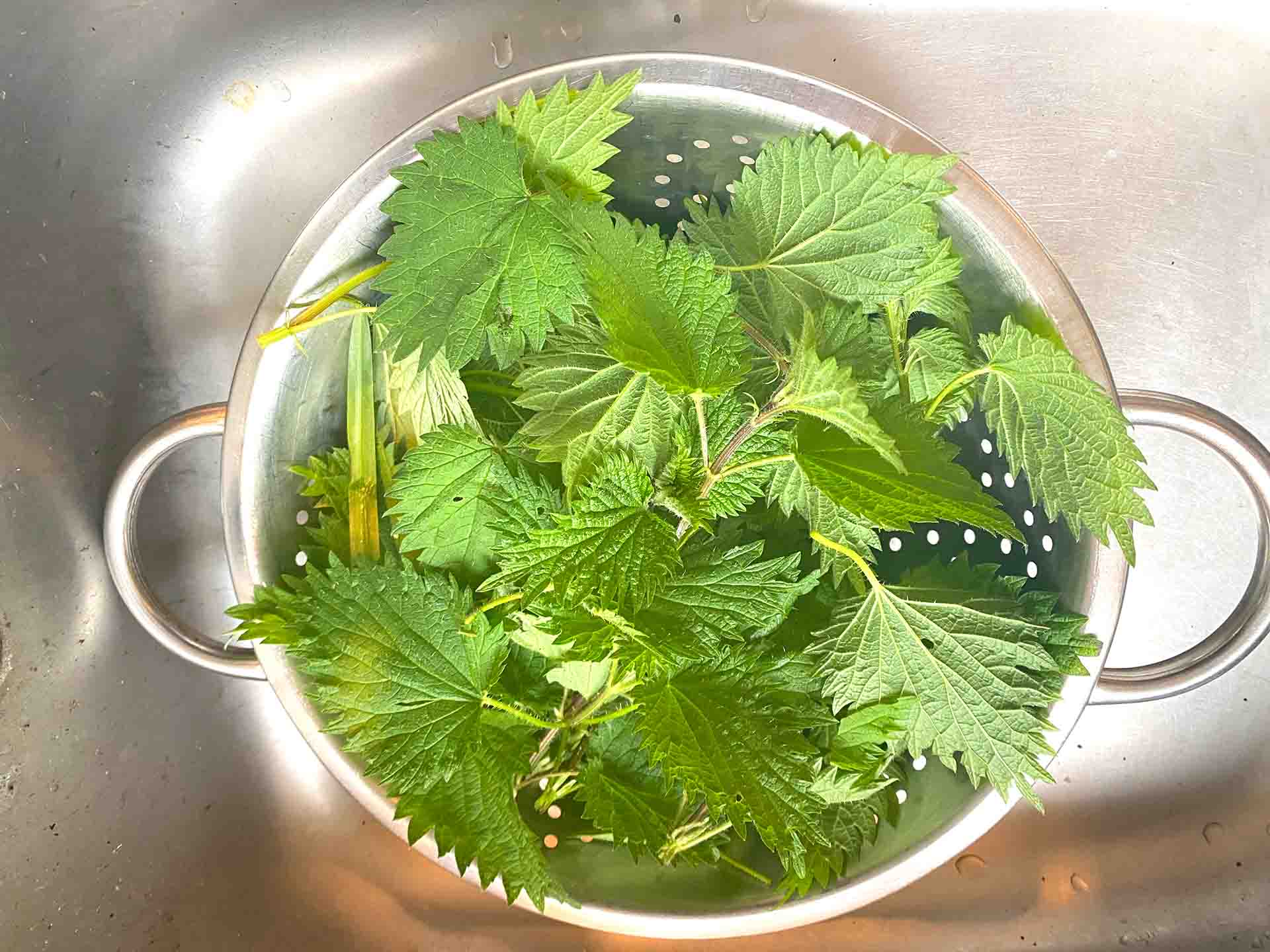
Nettles typically grow in moist, shaded areas, such as forests or near streams or the uncultivated areas of the garden. They can be identified by their heart-shaped leaves with jagged edges and small hairs that can cause skin irritation if touched. They are valuable to the environment as their roots can mine for Sodium, Sulphur, Nitrogen, Calcium, Potassium, Iron & Copper, and can, in turn, improve neighbouring plants' defence against pests and diseases by improving the surrounding soil with their invasive roots. Maybe this is the reason for the Turkish Proverb: “The nettle is the mother of the rose”.
To harvest nettles, wear gloves and use scissors to snip off the tops of the plants, leaving the roots intact. Once harvested, nettles can be dried for later use or used fresh in a variety of dishes.
While nettles offer many benefits, they can also cause skin irritation if touched. It's also important to avoid eating nettles raw, as cooking removes the sting. If you're new to using nettles, start with small amounts to see how your body reacts. Additionally, make sure to harvest nettles from an area that hasn't been treated with pesticides or other chemicals. By following these safety precautions, you can enjoy the benefits of nettles without any adverse effects.
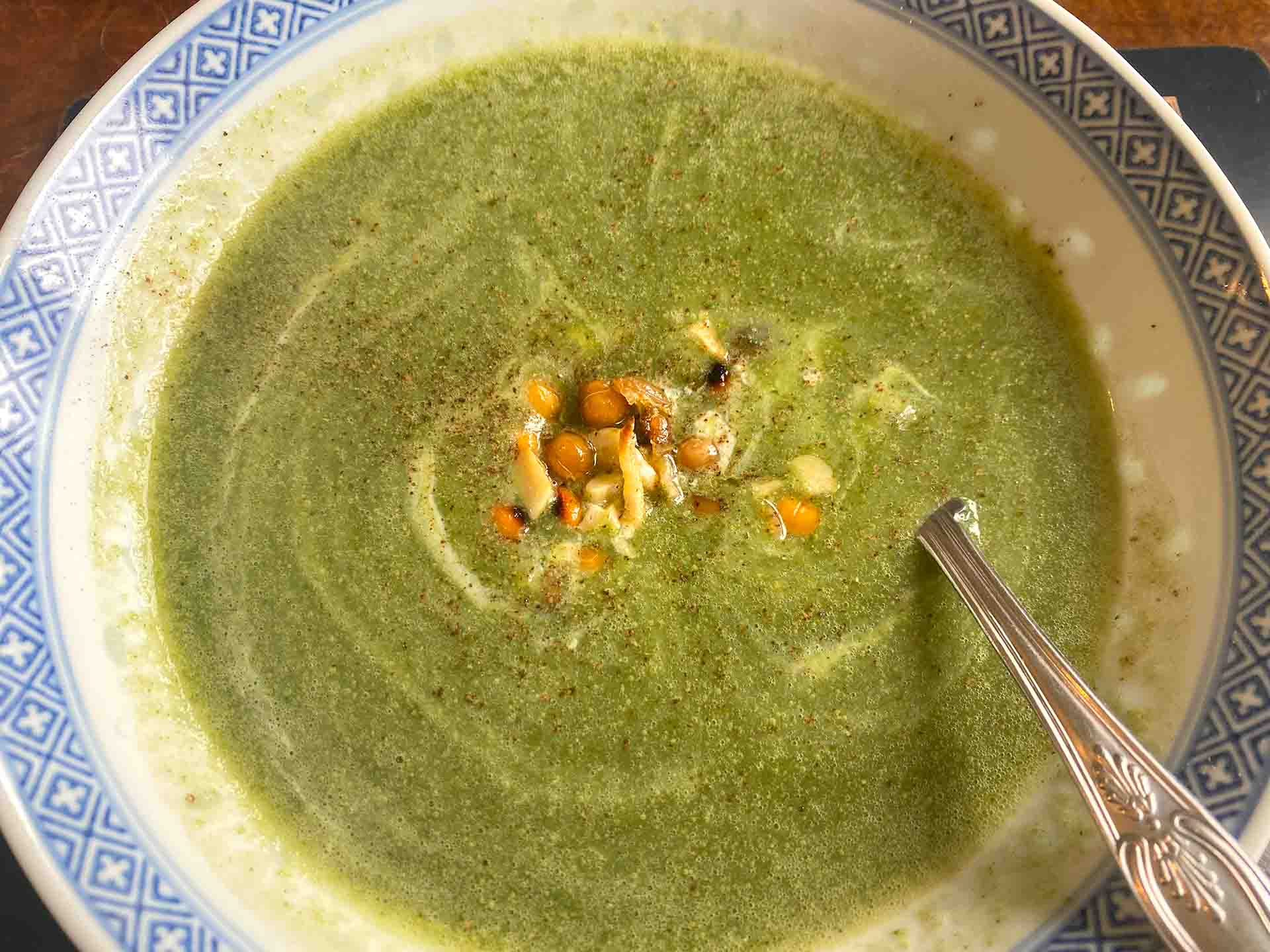
One popular way to use these versatile leaves is to make a soup, such as nettle and potato soup. To make this soup, sauté onions and garlic in butter, add chopped potatoes and nettles, and simmer until tender. Once cooked, puree the mixture and add cream or milk to create a creamy texture. Nettles can also be used in pesto, pasta dishes, and even in smoothies. Theirs is a unique taste which I like to think of as the taste of spring, as much as Wild Garlic.
Additionally, they are renowned as a hair tonic to combat hair loss and help in hair re-growth. Nettle leaves are rich in silica and sulphur. This helps in making hair shinier and healthier. Rinsing hair with nettle extracts and water results in the re-growth of lost hair. There is some evidence that regular use of a nettle rinse can restore hair colour too.
So, cultivate your nettles, fertilise your other plants, and add them to your broths and teas. And this is the perfect time of year to harvest them as the young growing tips are the most potent part of the plant. They can also be dried or even blanched and frozen for use in the winter when they lie dormant.
Nettles are incredibly important for butterflies, because they provide food for the caterpillars of many species. They're not just a weed, they're a vital part of the ecosystem.
The nettle is an astonishing plant. It has tiny, almost invisible hairs on its stems and leaves, which can sting you if you brush against them. But it's also a plant that's full of surprises. It's one of the most nutritious plants you can eat, and it's been used for centuries in traditional medicine.
Nettles are an example of how something that might seem like a nuisance can actually be incredibly important. They're not just a weed, they're a sign of a healthy ecosystem. If we can learn to appreciate them and work with them, we can create a more sustainable future for ourselves and for the planet.
It would take a small book to extoll fully the virtues of this “Common Weed”, this is a mere taste its qualities. Perfect with dandelion for a spring cleanse, they are a powerhouse that we ignore all too often, cheap and generous with their health-giving qualities, to coin a phrase “Oh nettle, where is thy sting?”
Be The First
Join us to receive the latest news about our new rural writings & books
We will only ever send you messages in line with our Privacy Policy.
All content on this page is the copyright of Pippa White (unless otherwise stated) with all rights reserved worldwide. No portion of this content may not be used, under any circumstances, without written permission to use it from Pippa.