
Pippa White
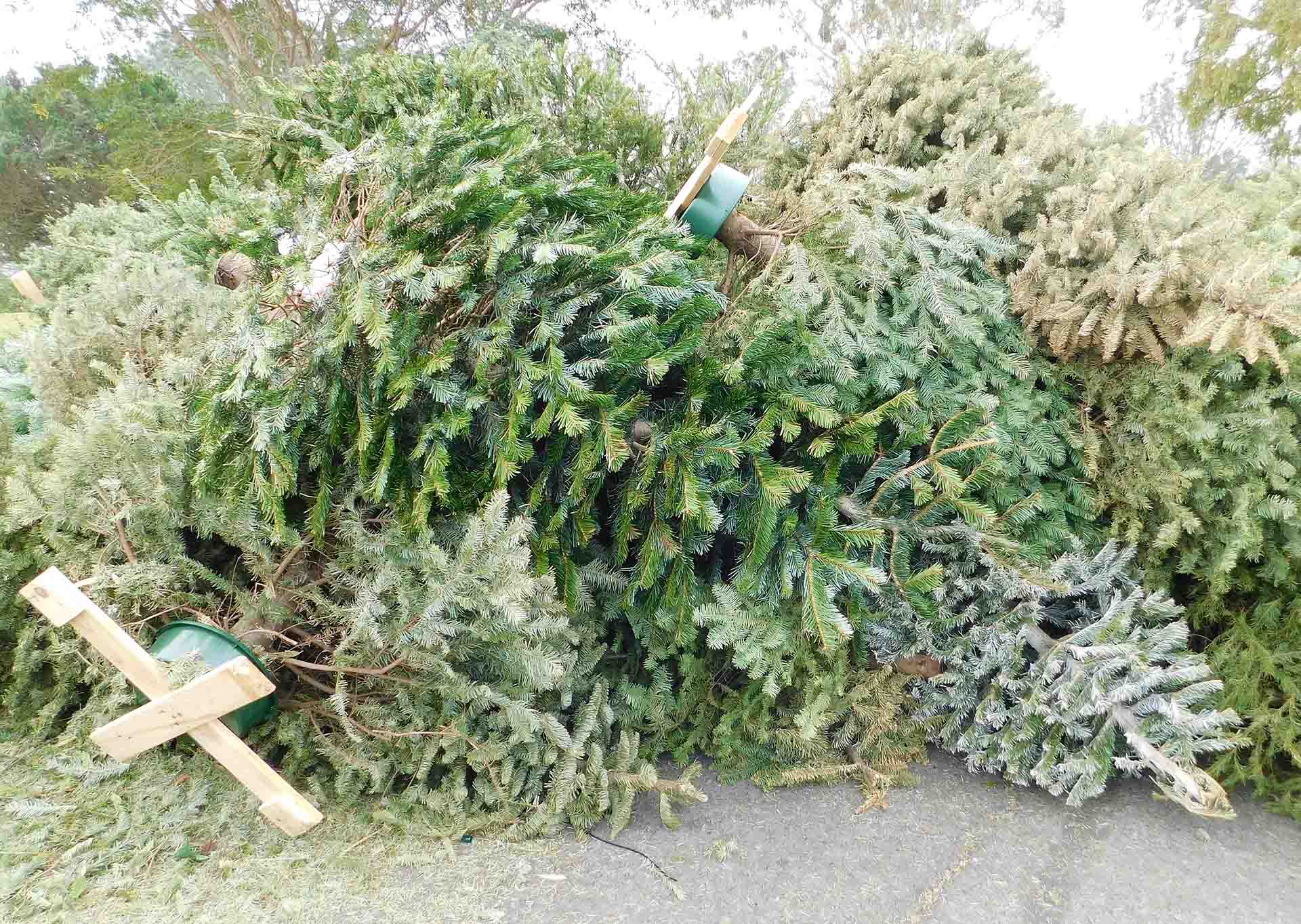
Oh dear, this has become a somewhat emotive debate, but I l ask you to fast forward to January 6th 2022 when the festivities are over, Omicron reigns, Jabs continue and our pavements are strewn with sad, dehydrated, brown Christmas Trees of every variety. Poor dead trees which the poor rubbish men then have to cart off to the Christmas Tree Cemetery at the tip.
There is, and has been, for some years a thoroughly modern quandary when it comes to Christmas: Real or fake? I must confess here to a vested interest in the subject having been a trade supplier of faux flowers in an industry where Christmas never sleeps. You only get over the final orders in December, your own celebrations, when you are back at the trade fairs in January planning next Christmas.
Years ago, I opted for artificial trees as I cannot bear the sight of the browning corpses in the streets come January, or worse Boxing Day. I thought they might be a more carbon friendly and kinder option, but it seems I was wrong.
Apparently for every tree cut down for our delight (blame Prince Albert), tree farmers plant three in their place. I confess to being slightly sceptical about this as I once rented a very nice house on, you guessed it, a Christmas Tree Farm. I can assure you that my landlord did not plant three more for one. But let’s assume he was a maverick and the Soil Association is right.
A brilliant article in The Guardian makes the comparison between carbon emissions from the real tree and the artificial tree. The main carbon footprint of a fake tree is from the oil used in its manufacture and of course shipping probably from China and is estimated to be up to ten times worse for the environment than a real tree. (See Note 1 below)
But the question becomes further complicated by the method of disposal of the real tree: burn, chip or send to the tip and each has different consequences in terms of methane or CO2 emissions. If your artificial tree goes to the attic for ten years and does its duty for those ten then it may be that it can be the more eco-friendly option.
In our PC world, as if we don’t have enough stress already this year – is Christmas on or off for instance. Do I dare go to a party, wear a mask, snog under the mistletoe? All the things we took for granted pre-pandemic seem like pipe dreams now.
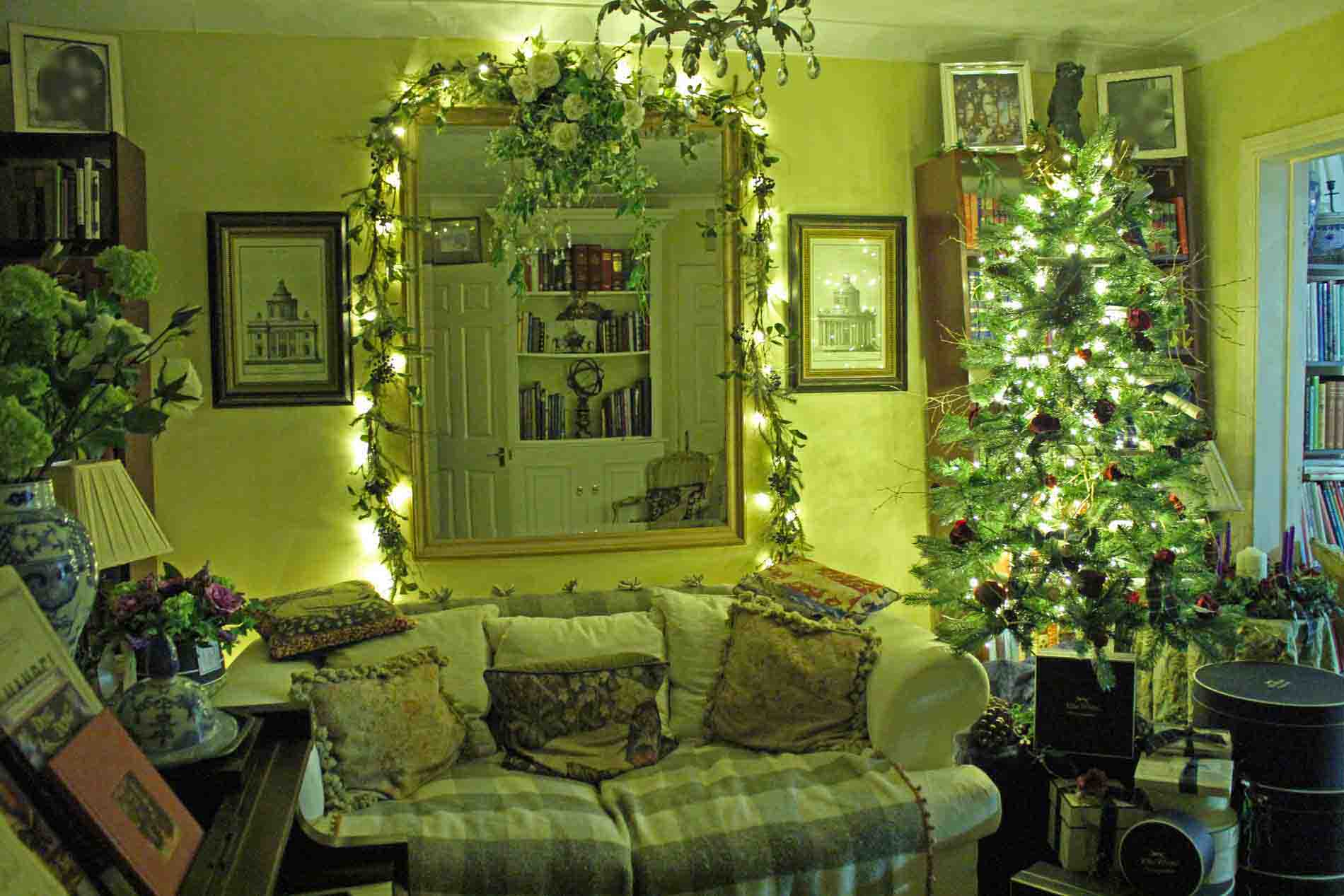
So, the issue is do I use the artificial tree I have already used for 8 years again, do I buy a real, cut Christmas tree to support the UK Christmas market and the planting of 3 to 10 new baby trees or do I simply buy a little tree in a pot to put outside the kitchen on the table?
Well, after all this research I am tempted to fling caution to the wind, buy a forest of real trees in pots, hire a venue and host an extremely extravagant masked ball. Economics, ergonomics and ecology whatsits aside, it sounds fun, but sadly unattainable.
I am reaching the inevitable potential compromise: use the artificial one one more year, and buy a little potted tree to grow on for next year and I am sorry there will be no cut tree to be abandoned on the sidewalk on Boxing Day. And as for the planting of three more trees, we have already vowed to gift trees in Her Majesty’s Platinum year as per her request to the nation.
- The key here is PVC. PVC (polyvinyl chloride) is a petroleum-derived plastic. The main raw material for fake Christmas trees is both non-renewable and polluting, and you can’t recycle it. Furthermore, PVC production results in the unhealthy emission of a number of carcinogens, such as dioxin, ethylene dichloride and vinyl chloride. Also, lead is frequently used to create the actual needles, and as we all know, lead has a number of significant negative health effects, including kidney, neurological, and reproductive system damage. Therefore, touching the tree, especially with your face, can be quite hazardous. Also, vacuuming around the tree can spread tiny lead particles in the air, which creates an inhalation danger. https://www.zmescience.com/other/feature-post/real-vs-artificial-christmas-tree-science-says/
Be The First
Join us to receive the latest news about our new rural writings & books
We will only ever send you messages in line with our Privacy Policy.
All content on this page is the copyright of Pippa White (unless otherwise stated) with all rights reserved worldwide. No portion of this content may not be used, under any circumstances, without written permission to use it from Pippa.