

Pippa White
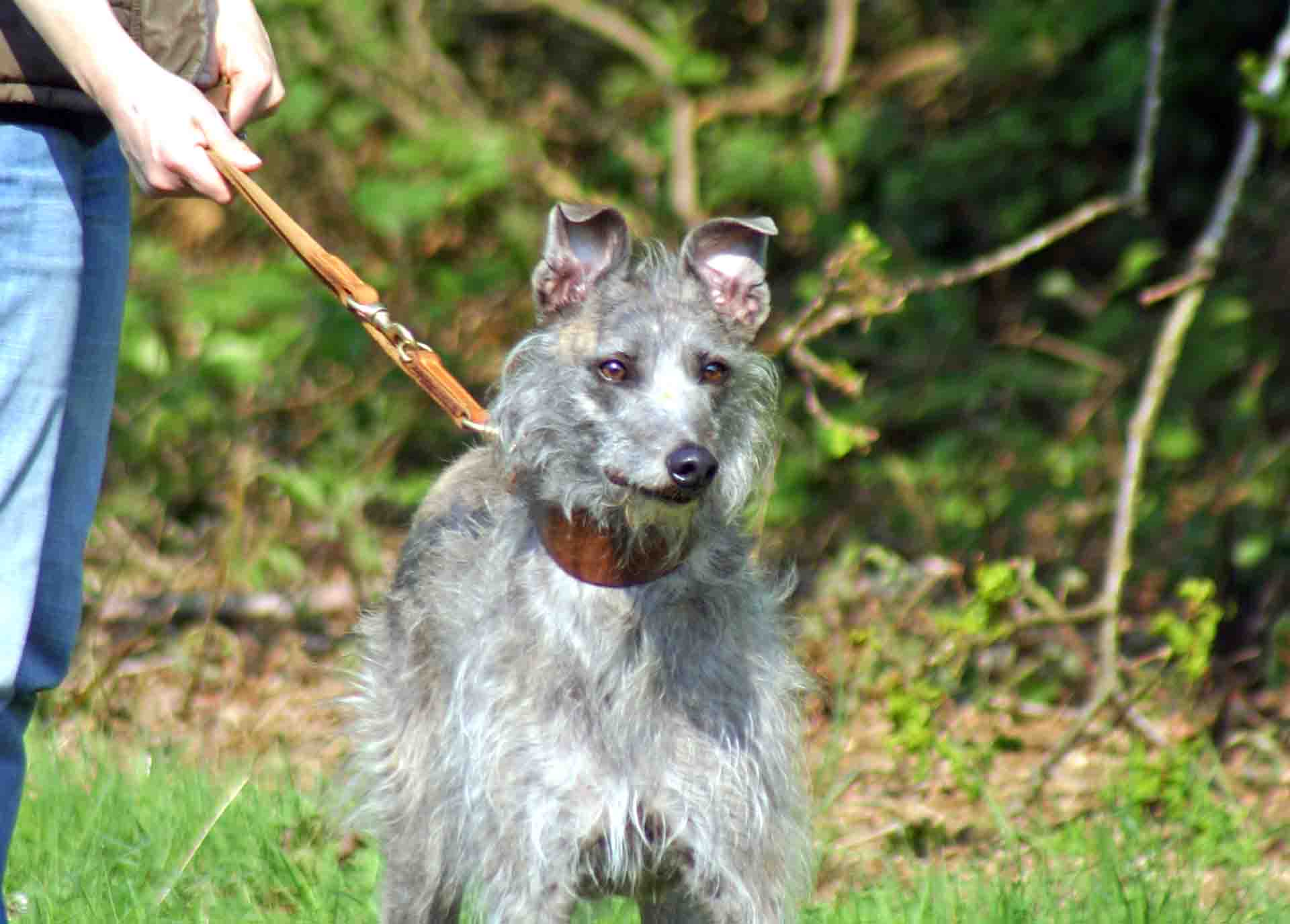
I have always preferred walking (?) my dogs off the lead, and so, I believe, do my dogs. Dogs need to run, to shake, to revel in their freedom when they are exercising. It is an integral and God-given doggie right.
However, given our propensity as humans, not only to live in cities, or towns, and to exercise our dogs in public spaces, dogs tend to be confined to the “leash”, or on the lead. Often I ask myself, who is taking who for a walk, when I observe yet another hapless owner being dragged along at high speed by a tiny, determined canine, just a fraction of their weight and size.
Whenever I am privileged enough for my life to be enhanced by a new companion, it is my aim to have them safely and responsibly off the lead as soon as possible. And I freely admit that I am lucky enough to live in a very rural part of the country, though I suspect luck has less to do with it than my preference for rural life.
Granted this is not possible in urban areas, unless one is walking in a great park, but even in the country, we have to be very sure of our dogs potential behaviour before taking liberties on some else’s land (unless of course one is lucky enough to own it). Nevertheless, all my dogs have been “trained” to be off the lead and there are three major components to that training: Love, Discipline and Expectation.
It is a trade-off; the dog gets the freedom it needs to exercise properly and with joy and freedom, in return for being obedient and coming to call, immediately. Granted there have been a few times when this policy has failed, but rarely enough to cause injury and certainly none to other animals, including other dogs.
In his book Rewilding our Hearts, Mark Bekoff writes about his studies of "dog and human behavior" and found that most of the time when dogs are bad in public, humans have led them astray. His most surprising finding: dogs on a leash tend to bite people more than free-running dogs. "On the leash," he says, "they’re more territorial and frustrated. Not unlike people.” *
That is most certainly my impression. My mother’s late lurcher was impossible to have off the lead, and I used to be incredibly embarrassed at his aggression toward other dogs, and sometimes people. In my book, aggressive animals are being treated in that way; they are taking the lead (pun intended) from their owners.
So my plea is simple: if you have a dog, particularly a large dog such as a lurcher, or you are considering one, please do not do this without a) having access to a large park or other exercise space where they can exercise off the lead b) make sure that they are trained properly so that they are completely safe off the lead.
It takes time and effort, I have spent hours outside in appalling weather doing exactly that, but there is no greater reward than watching your beloved companion running happy and free and greeting other dogs with ease and joy.
In the introduction to Mark’s book which I quote above, Richard Louv writes:
'Rewilding, as Marc defines it, is, yes, about becoming reenchanted with nature and nurturing our sense of wonder. But it is about more than that. It is about how our connections with other life, human and nonhuman, can change us, make us more compassionate and empathic, and harness "our inborn goodness and optimism." Rewilding is achieved through that most radical of acts: opening ourselves to others. In essence, it is about unleashing our hearts.'
Perhaps, though, I should let another dog devotee have the last bark:
'Properly trained, a man can be dog’s best friend.'
* Bekoff, Marc. Rewilding Our Hearts. New World Library. Kindle Edition.
Be The First
Join us to receive the latest news about our new rural writings & books
We will only ever send you messages in line with our Privacy Policy.
All content on this page is the copyright of Pippa White (unless otherwise stated) with all rights reserved worldwide. No portion of this content may not be used, under any circumstances, without written permission to use it from Pippa.