Pippa White
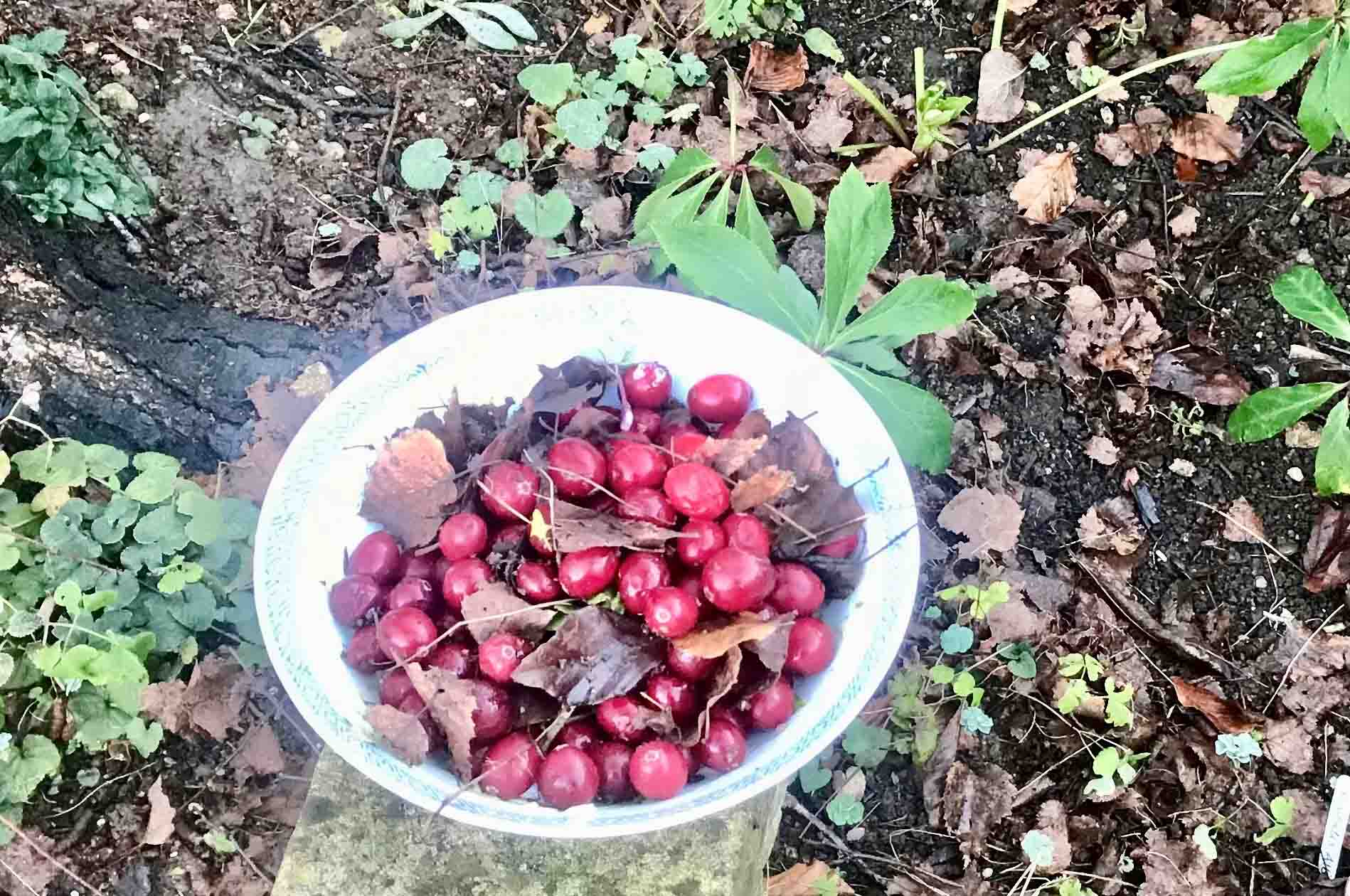
The cranberries made a rich and redolent addition to the colour in the garden, contrasting on the dull dark days with the white hellebores. Blood and bandages, I hear you say!
They looked so enticing I was sure that they would disappear into hungry beaks before the day’s end. Curiously, and curiouser, by the day, they remain in their pristine gleaming polished crimson glory, untouched by avian bill.
Why, I wonder? What was putting them off? C suggested the birds did not recognise a foreign berry, but that has not stopped them eating all kinds of exotic fruits before, what perhaps, I mused, did the birds know that I didn’t?
Perplexed, I turned to that idol of modern times, the disseminator of information, and disinformation, but ever lurking in the background of life as a source of answers and typed in “Cranberries and Glyphosate”.
I must warn you that glyphosate is a particular pet hate of mine for all sorts of reasons, not least its name, so I may have been jumping on to my high horse. But on the other hand, there may have been some method in my madness.
NBC News reported that:
“You could lose hours of your life trying to find fresh organic cranberries for your Thanksgiving relish. Organic growers produced about 2.8 million pounds of the tart berries in 2016, a mere 0.3 percent of the overall market, according to a report by IndexBox, a market research publisher.
Because they are grown on vines in wetlands or bogs, cranberries are susceptible to an impressive suite of pests, fungal pathogens and weeds that are difficult to control, which makes organic growing particularly arduous.”
And more:
Across the U.S., the cranberry market is dominated by Ocean Spray, a cooperative owned by 700 growers. Aside from a few organic growers in Canada, Ocean Spray mostly sells conventional cranberries, with less stringent standards for fungal, pest and weed controls. Ocean Spray spokesperson Kellyanne Dignan said the cooperative’s growers are “excellent stewards of the land” driven by what consumers want.
Chemicals commonly used on cranberries include diazinon, a pesticide that controls insects on a range of fruit, vegetable, nut and field crops. The USDA Pesticide Data Program found that 5 percent of conventional cranberries sampled in 2016 had traces of diazinon. The pesticide was banned for residential use in 2005 based on the risk it posed to human health, though it is still allowed in agriculture.
Diazinon is known to cause problems:
Diazinon is very highly toxic to birds, bees and most other insects. Studies show that diazinon is moderately toxic to fish and amphibians, and is only slightly toxic to earthworms.
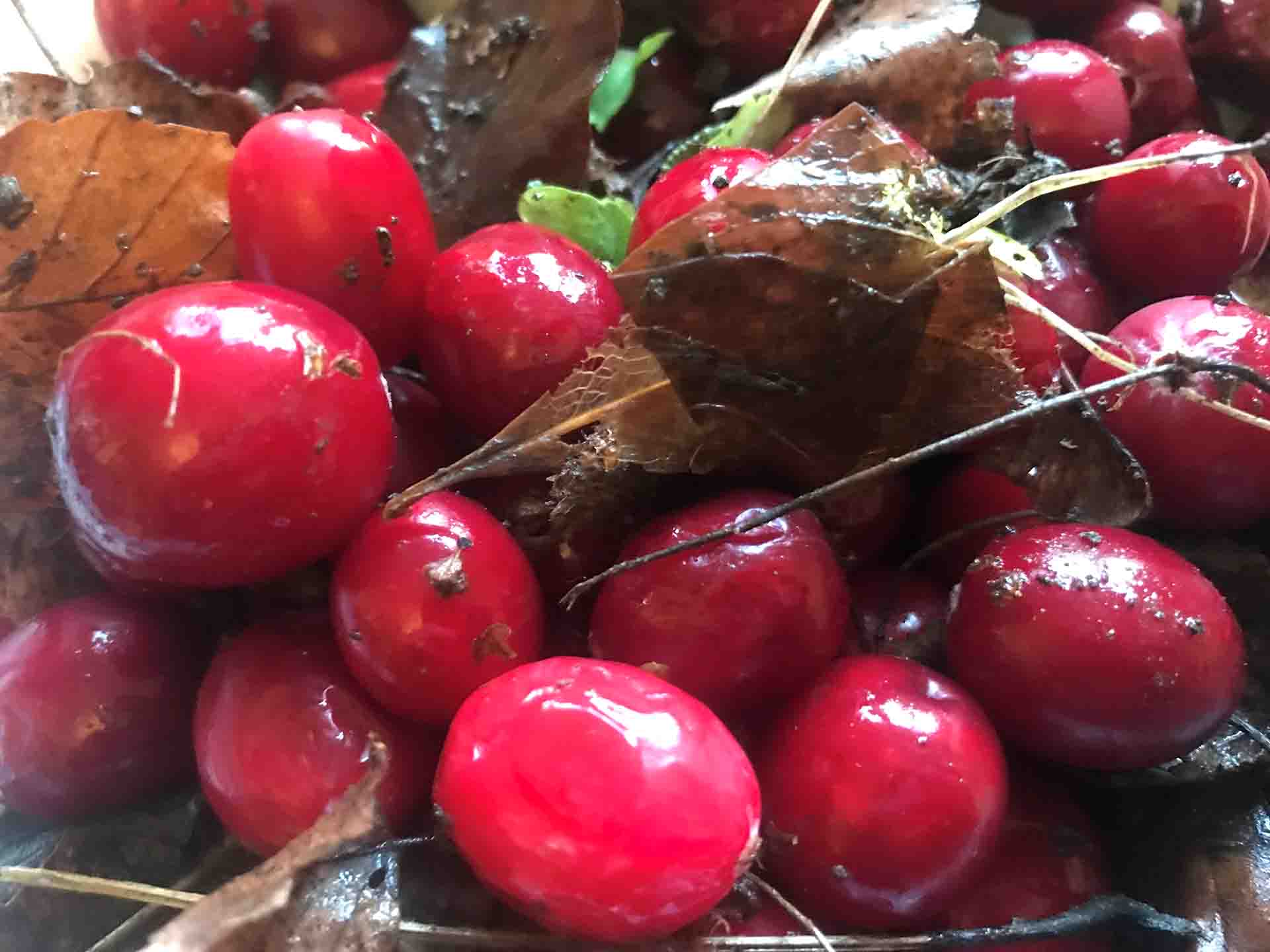
It damages the birds’ central nervous system, and flight co-ordination apparently, and is particularly toxic to Geese. So, I have been outside and collected all the cranberries from the ground under the birch, praying that I have not poisoned, or worse, killed any of my dear birds. Reassured, but only slightly, by the morning bird song, I retrieved the potentially poisonous offerings from the garden, and I am feeling, thoroughly, chastened.
How many times have I with the best of intentions put out unsuitable offerings for my little friends? Only recently I was reading an article about the possibility that commercial birdseed could be GMO and contaminated with all kinds of -ides. What Silent Spring are we creating? When we so thoughtlessly contaminate our earthly home and that of all creation?
No more non-organic offerings for my friends, I promise. Organic or bust. No wonder, they were averse, not just xenophobic, and I do hope that no one was hurt by my lack of thought. Maybe, just maybe, those birds had more sense than me, for 10 days later the now-retrieved cranberries had been untouched.
It would appear that “Blood and Bandages” or worse could have been the order of the day. I shall be more careful in future and no it wasn’t glyphosate, but it could easily been.
Be The First
Join us to receive the latest news about our new rural writings & books
We will only ever send you messages in line with our Privacy Policy.
All content on this page is the copyright of Pippa White (unless otherwise stated) with all rights reserved worldwide. No portion of this content may not be used, under any circumstances, without written permission to use it from Pippa.