
Pippa White
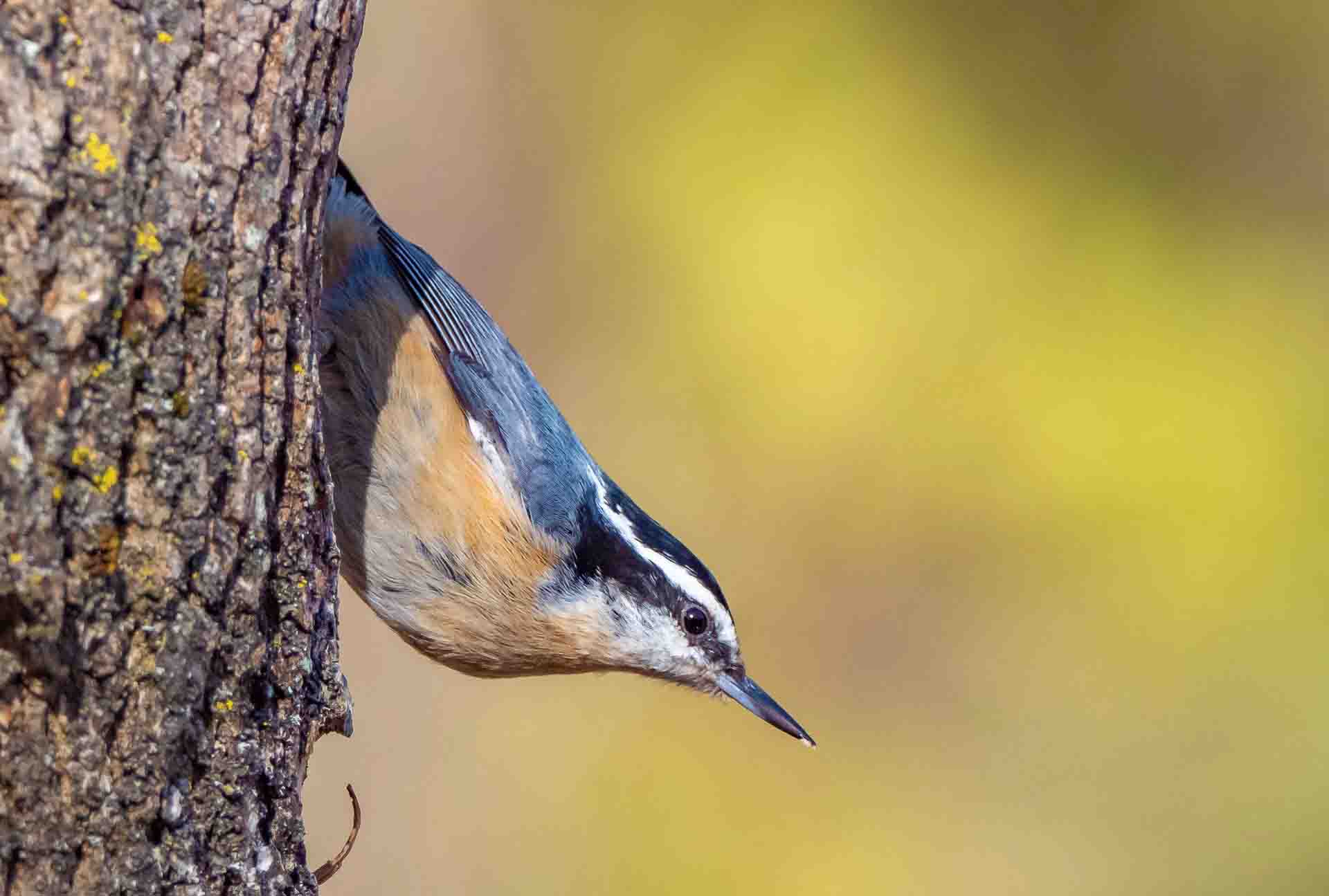
Each morning when the very first tiny glimmerings of light sliver through the trees in the copse outside my bedroom window, I hear the first stirrings of the small bird that swoops down from the Silver Birch and low across the garden with a cry that both contains surprise and joy at the new day. Some describe the call as “dwip, dwip” which does indicate the sense of movement but not the musicality of the moment with the undulating quality of its flight and song.
The sound is quite unique, just is that of the wren another small bird with a big voice, I suppose they make up in volume what they make lack in size being a little larger than a robin, but smaller than a blackbird, both of course, veritable virtuosos in their own right, I had not come across the Nuthatch, as I discovered it is, before moving here, where the garden and the trees provide a perfect habitat for this fascinating little member of the ornithological community. (Though I am unsure whether that term applies to the birds or the twitchers!)
They are exceptional in that they scuttle down the bark of a tree, walk in any direction and even walk upside down on a branch. This gives them far more access to any hiding insects which they eat in summer. In winter they feast from their homemade larders made in the trees where they store acorns, yew berries, hazelnuts and pinecones which they sensibly cover with moss, bark or lichen. It is thought they derive their common name Nuthatch from the habit of breaking open their groceries with their beaks. Blue backed, with a red coat, they wear the rather distinctive stripe of a masked raider! And if you choose to feed them, they will choose your supplies over their own.
They nest in the holes of trees or walls, packing around the nest with mud and resin so that the young are protected from predators. They also use pieces of bark as tools, and if the piece is particularly prized, they carry it with them. They are generally monogamous and we have had the absolute joy of seeing four at once on the birch in the garden, presumably a family!
Their language is composed of trills, whistles and calls, and they are thought to understand the calls of other birds in North America, called the Chicadees. Certainly, here in Gloucestershire, they grace the airwaves similarly to their distant kin, the wren! (See above).
In short, a charming bird with strong survival skills, proven intelligence, musical ability, beauty to behold and a joyous addition to the garden. In a time of crisis perhaps they teach us, like other birds, to keep our life simple and concentrate on what is important.
I clearly am not the only one to learn from this frugal, sensible and thrifty bird:
When it gets truly personal, when the nuthatches or waxwings propel you to think about your own relationship to food, when they make you remember how your grandmother used to freeze corn and can tomatoes to get through the winter, well, it’s potent stuff. At least it is for me.
But if I had my way, we’d just give everybody in Congress a pair of binoculars and put them in the woods.
I couldn’t agree more but perhaps I should let Thoreau have the last word:
The chickadee and nuthatch are more inspiring society than statesmen and philosophers…
Put it this way, I would rather listen to the Nuthatch than the PM’s Daily Briefing at the moment!
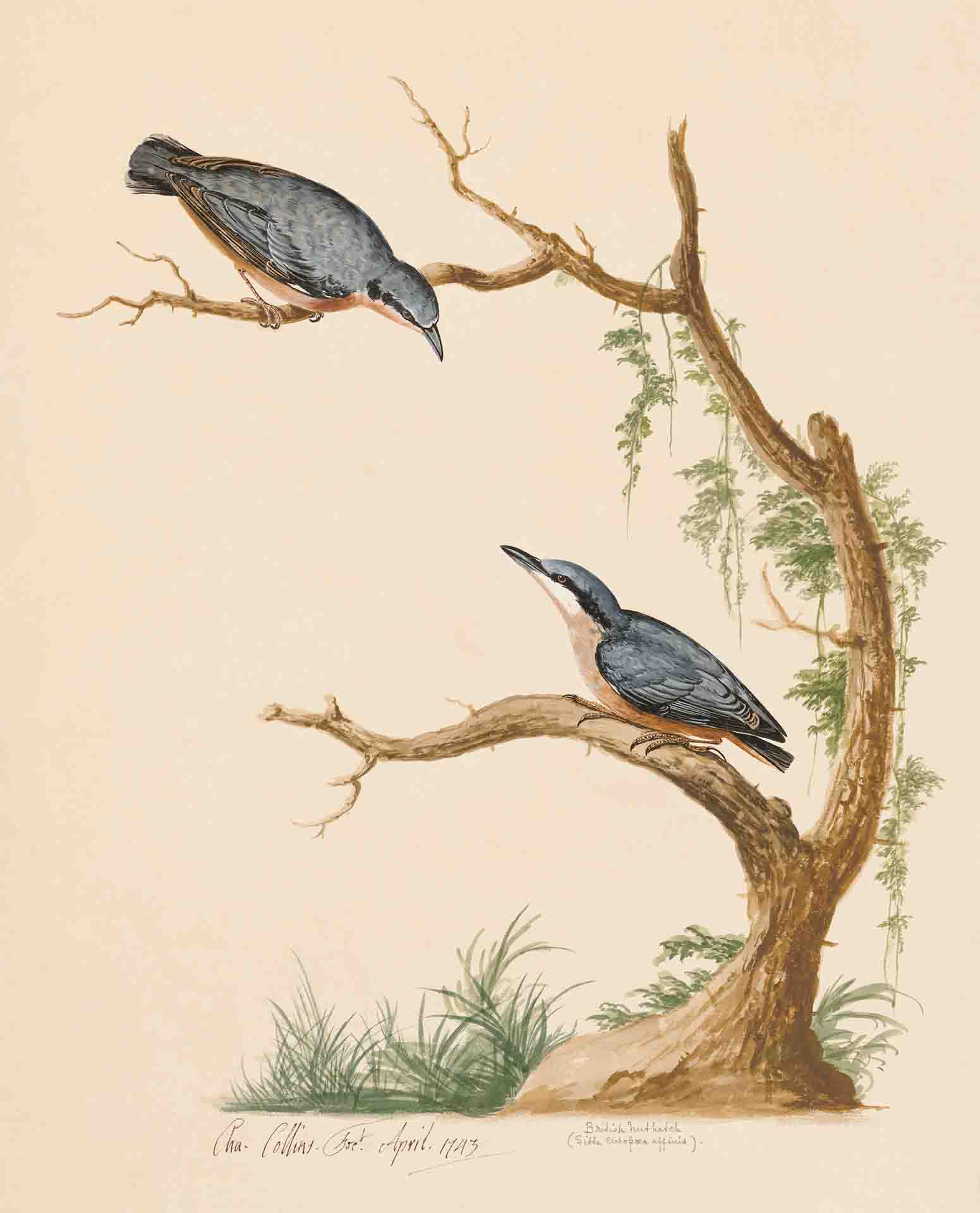
Image Credits: Taylor White Collection, Rare Books & Special Collections, McGill University Library.
Be The First
Join us to receive the latest news about our new rural writings & books
We will only ever send you messages in line with our Privacy Policy.
All content on this page is the copyright of Pippa White (unless otherwise stated) with all rights reserved worldwide. No portion of this content may not be used, under any circumstances, without written permission to use it from Pippa.