

Pippa White
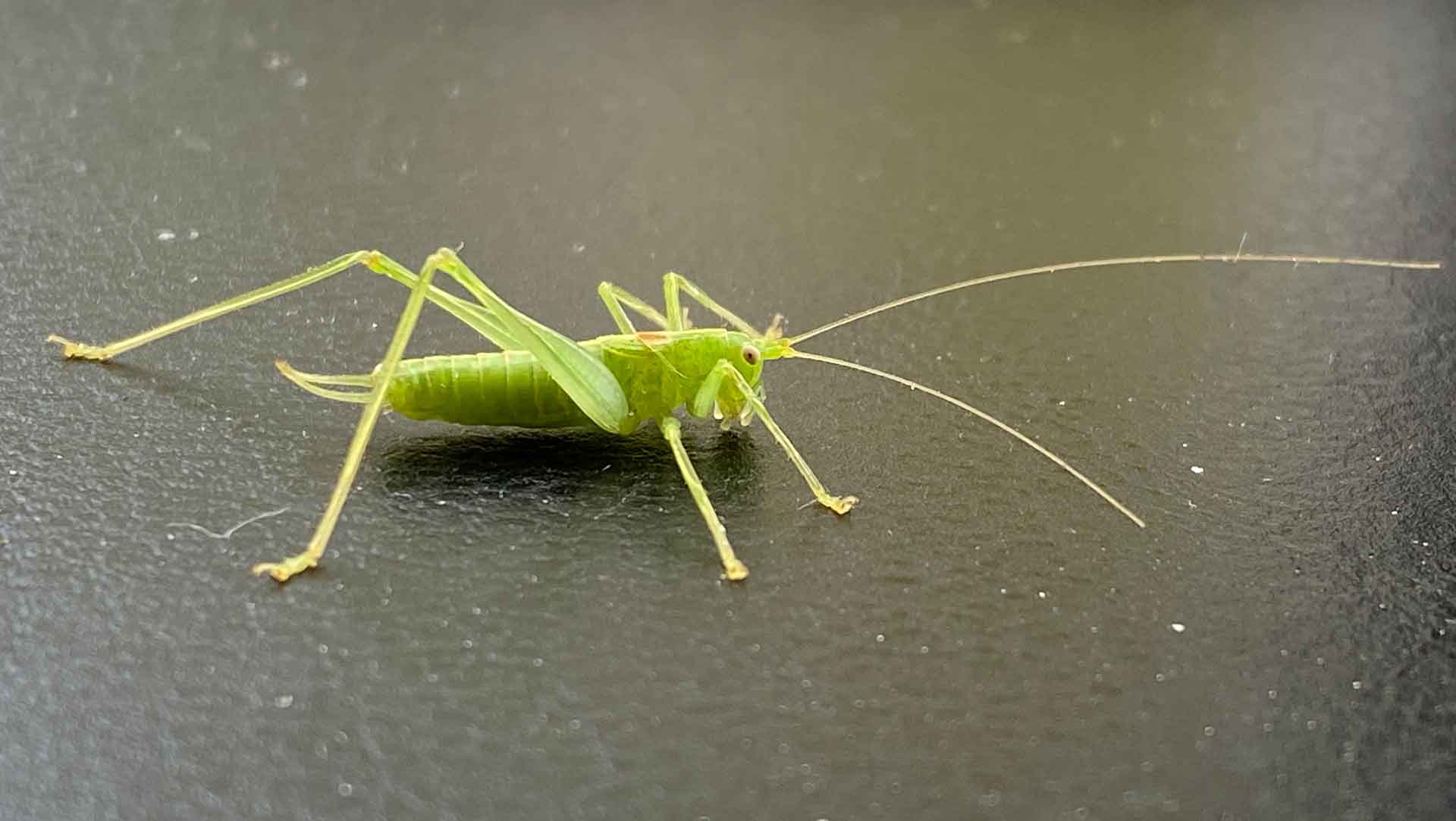
Grasshopper Green
Grasshopper-Green is a comical chap;
He lives on the best of fare;
Bright little trousers, jacket, and cap, –
These are his summer wear.
Out in the meadow he loves to go,
Playing away in the sun;
It's hopperty, skipperty, high and low:
Summer's the time for fun!
This poem first appeared in The Nursery – A Monthly Magazine, Volume XVII, 1875 (John L. Shorey, No. 36, Bromfield Street, Boston). It is now in the public domain.
This morning as I was reading and working in the early dawn a grasshopper arrived on my journal at 5.56am. A little surprised, stirred but not shaken, I gently removed it with a glass and piece of paper and turfed it out of the window.
10 minutes later, another grasshopper arrived, on my arm. A little shaken and stirred, I removed it by the same means and sent it to join its friend or relative.
15 minutes ANOTHER grasshopper arrived, this time on my laptop screen. By this time I was getting a little furious, but more curious. Carefully taking it off my screen by the same means, I put it gently out of the window, wondering what the grasshoppers’ message was.
In case you think me fanciful, I was reminded of Jung and the Golden Scarab. This is a famous story in psychology best recounted by Jung himself:
A young woman I was treating had, at a critical moment, a dream in which she was given a golden scarab. While she was telling me this dream, I sat with my back to the closed window. Suddenly I heard a noise behind me, like a gentle tapping. I turned round and saw a flying insect knocking against the window-pane from the outside. I opened the window and caught the creature in the air as it flew in. It was the nearest analogy to a golden scarab one finds in our latitudes, a scarabaeid beetle, the common rose-chafer (Cetonia aurata), which, contrary to its usual habits had evidently felt the urge to get into a dark room at this particular moment. I must admit that nothing like it ever happened to me before or since.
Synchronicity: An Acasual Principle (1952)
The Collected Works of C.G. Jung
Paragraph 843
Princeton University Press Edition
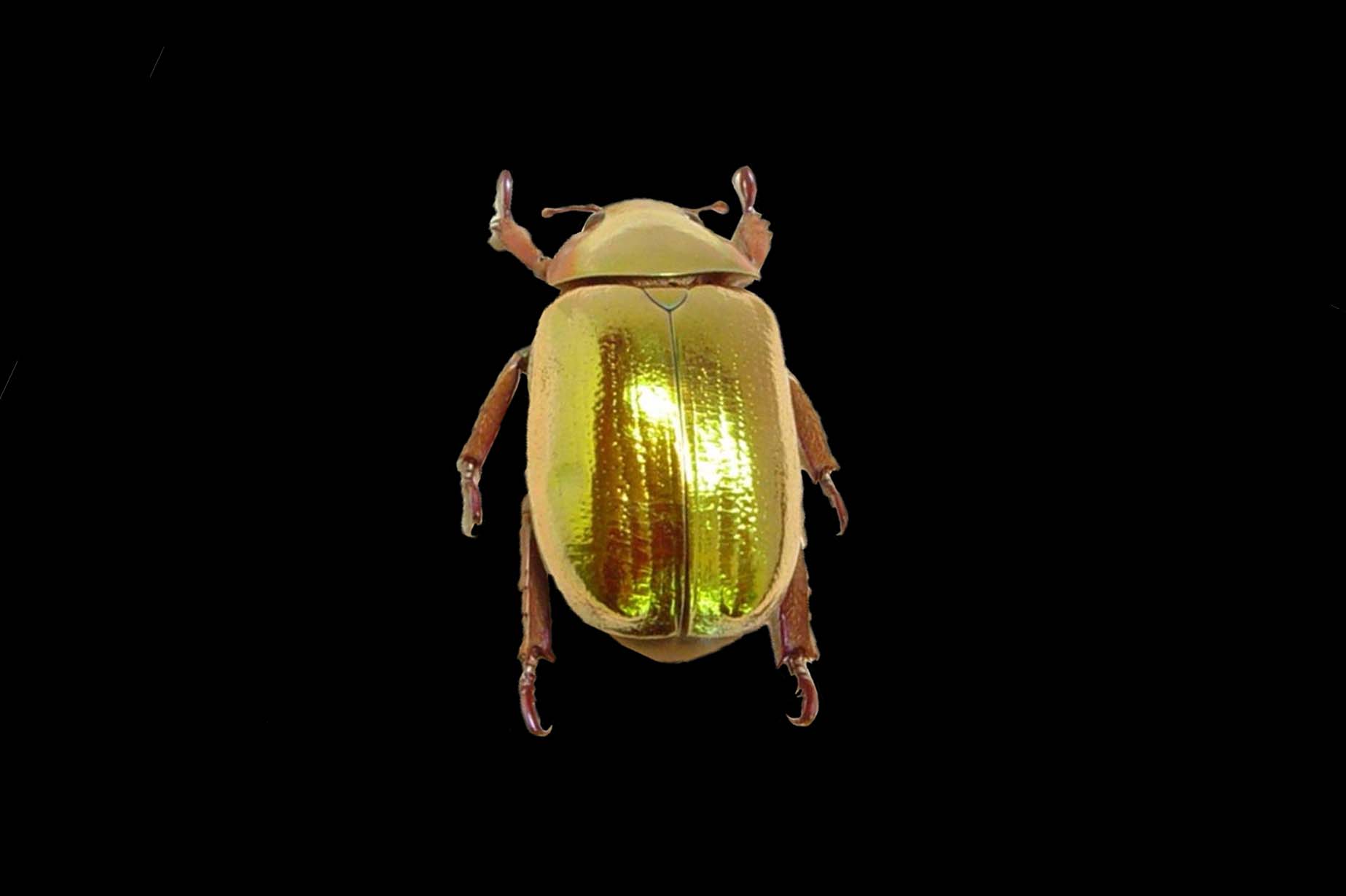
This is usually interpreted as follows:
Jung Opens the Window to Coincidence
A young woman of high education and serious demeanour entered Jung’s office. Jung could see that her quest for psychological change was doomed unless he was able to succeed in softening her rationalist shell with “a somewhat more human understanding.” He needed the magic of coincidence.
He asked for it; searched his surroundings for it. He remained attentive to the young woman while hoping something unexpected and irrational would turn up. As she described a golden scarab—a costly piece of jewellery—that she had received in a dream the night before, he heard a tapping on the window. He looked and saw a gold-green glint.
Jung opened the window to coincidence. He plucked a scarabaeoid beetle out of the air. The beetle, closely resembling the golden scarab, was just what he needed—or just what she needed. “Here is your scarab,” he said to the woman, as he handed her a link between her dreams and the real world.
Source: Psychology Today
This reminder of the power of synchronicity inspired me to look up the “meaning” of the Green Grasshopper and what I discovered was fascinating….
As this is a long post, please go to Grasshopper Green - Part II.
Be The First
Join us to receive the latest news about our new rural writings & books
We will only ever send you messages in line with our Privacy Policy.
All content on this page is the copyright of Pippa White (unless otherwise stated) with all rights reserved worldwide. No portion of this content may not be used, under any circumstances, without written permission to use it from Pippa.